
Can a Yellowed Wedding Dress Be Restored to Its Original White?
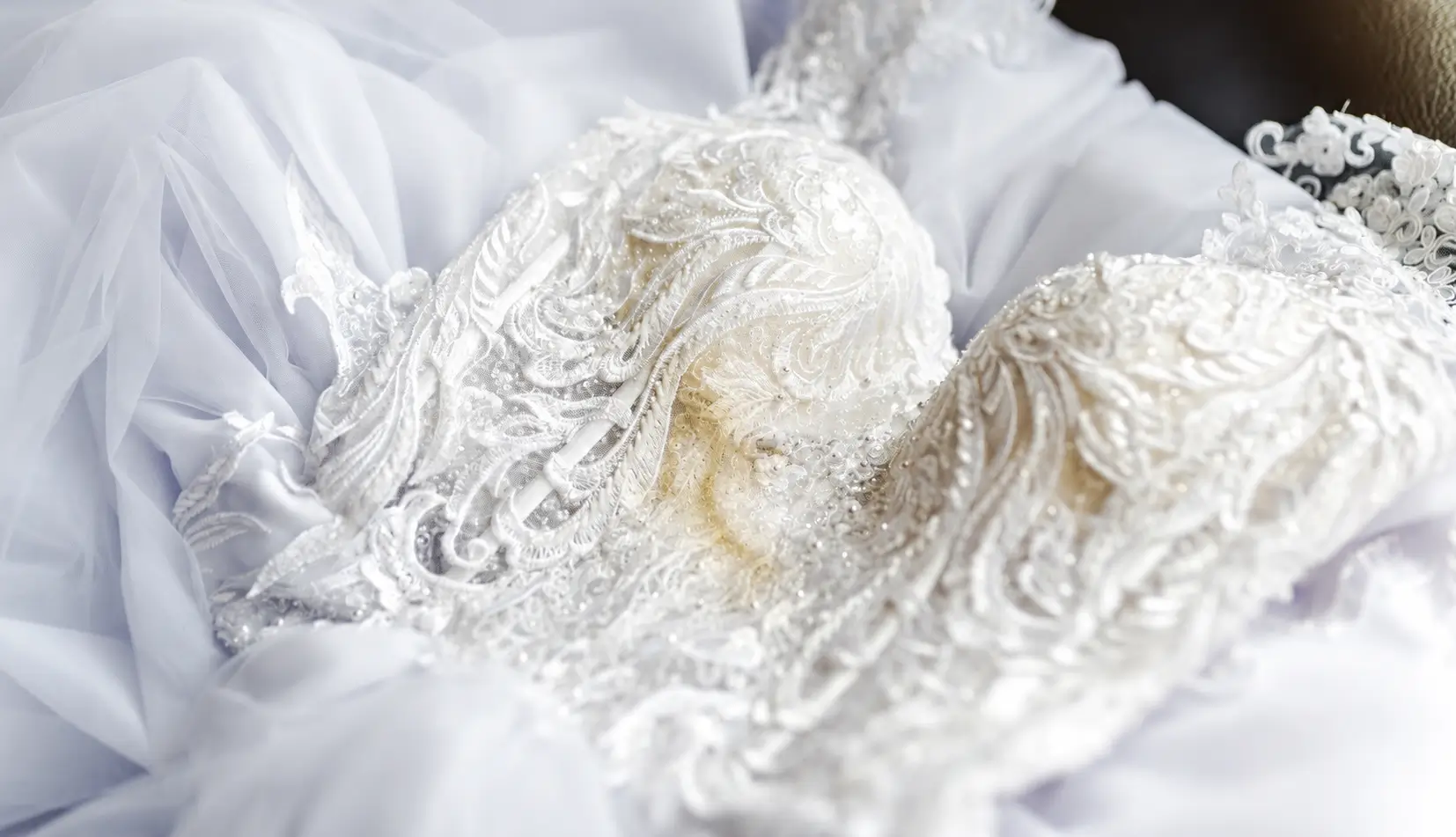
You unzip the garment bag expecting the wedding dress you remember, and instead find fabric that's quietly turned yellow somewhere in the years since. Whether it's for a vow renewal, a daughter's someday wedding, or just to look at it again, that moment always comes with the same question.
The key isn't whether restoration is possible in general, but if it can save your specific dress, which all depends on what’s causing the yellowing. That answer, cause by cause, is exactly what follows.
The Four Different Causes of Wedding Dress Yellowing
Why wedding dresses turn yellow traces back to one or more of four genuinely distinct causes. Find yours below. The cause determines both the treatment and your actual odds of success.
Sugar Oxidation (the Most Restorable Cause)
Stored your dress within the last five years? Sugar is the likely culprit. Champagne, wine, and cake frosting leave sugar residue that's invisible on your wedding day, which then oxidizes into yellow-brown discoloration over the following months, usually near the hem or bodice specifically.
- Restoration odds: 50 to 80% improvement.
- Best candidate: dresses stored under 5 years.
- Helpful detail: remembering where a spill happened speeds up treatment.
Sugar stains are chemically simple. The molecules haven't bonded permanently to your fibers yet, so professional treatment usually breaks them down and lifts them out.
Body Oil Oxidation (Moderately Restorable)
Every dress absorbs some body oil while you wear it, at the underarms, neck, and bodice. These oils don't show up right away. They oxidize slowly over years, creating a soft, even tone across the whole dress rather than distinct spots.
- Restoration odds: 30 to 60% improvement.
- Fabric matters: silk releases oils more easily than polyester.
- Tell tale sign: uniform aging instead of isolated stains.
If your dress looks evenly aged rather than spotted, this is probably why.
Plastic Bag Off-Gassing (Sometimes Reversible)
Did your dress come home in its original salon garment bag and stay there for years? That bag is likely part of the problem. Plastic breaks down slowly and releases chemicals that settle into your fabric, producing a uniform yellow cast.
- Restoration odds: 40 to 70% improvement.
- Time sensitive: earlier removal from the bag means better odds.
- Do this now: switch to acid-free storage today, even before booking treatment.
Every extra year in plastic works against you.
UV Light Damage (Usually Permanent)
Was your dress stored anywhere light could reach it, even indirect daylight or a closet bulb that clicked on now and then? Ultraviolet exposure has been breaking down the dye molecules in your fabric.
- Restoration odds: 5 to 20% improvement.
- Why it's different: this is structural damage, not a removable stain.
- Our honest take: we'd rather set the right expectation than sell you a treatment that won't deliver.
If you're unsure, think about where your dress was stored and for how long. That usually tells you the answer.
What Professional Whitening Treatment Actually Involves
Whitening might sound like bleach, but that's the wrong idea entirely. Bleach damages silk and most other wedding dress fabrics, so it never actually touches your dress during a properly executed treatment.
Here's what happens instead:
- Cause identification first: the actual cause of yellowing gets confirmed before any treatment starts, since the wrong approach can genuinely set a stain rather than lift it, undoing the exact outcome you're paying for.
- Enzyme treatments: these break down protein-based stains such as body oils at a molecular level, targeting the actual oxidized oil molecules directly rather than simply masking the visible color.
- Oxygen-based brighteners: calibrated specifically to silk's actual pH rather than a standard household approach, these target sugar oxidation and general discoloration without the fiber damage a harsher chemical would cause.
- Multiple gentle passes: these replace one aggressive treatment attempt, with progress checked carefully between each round rather than committing to a single intensive pass that risks overcorrecting.
- Conditioning: this restores strength and flexibility to the fabric after whitening, addressing the real stress the treatment itself places on fiber that may already be decades old.
That last step matters as much as the whitening itself. Chemical treatment stresses decades old fibers, and skipping conditioning is exactly how a dress comes out lighter but genuinely weaker. Performed correctly, your dress should feel close to how it did before treatment, not brittle or stiff, which is exactly the difference between a rushed single pass approach and a genuine process.
How Old the Dress Is Matters More Than You'd Expect
The age of your dress doesn't just affect how deep the yellowing runs. It affects whether or not the fibers can even handle restoration in the first place, since a treatment intensive enough to meaningfully improve yellowing also places real stress on whatever fiber strength remains.
- 5 to 10 years: fiber integrity is still strong at this stage, and you can genuinely expect a good response to treatment, since the underlying structure holding the fabric together hasn't had much time to weaken on its own.
- 15 to 20 years: results get mixed here, since yellowing has typically set deeper by this point, and fibers have often started to weaken on their own regardless of how carefully the dress was actually stored throughout that stretch.
- 30 or more years: you're dealing with two problems at once, discoloration and structural breakdown happening simultaneously. Restoration can genuinely improve the color, but it can't undo decades of natural aging that's happened to the fiber structure alongside the yellowing itself.
If your dress falls into that last category, the goal often shifts from restoring it fully to white toward improving and stabilizing it instead. That's still a genuinely meaningful outcome for a dress carrying this much history, even when it isn't a complete reversal back to the original shade.
Realistic Success Rates by Fabric Type
Two dresses with identical yellowing can respond completely differently to the same treatment. Fabric is why.
- Pure silk: highest restoration potential, since its fibers release oxidized stains more completely under enzyme treatment than almost any other material covered here.
- Silk satin: high potential as well, chemically similar to plain silk, but it needs genuinely gentle handling during the actual treatment process specifically.
- Cotton lace: good potential, responds to the same treatments that work well on silk and other natural fibers.
- Polyester and synthetic blends: low potential, since most whitening chemistry is built specifically for natural fibers rather than synthetics, regardless of how carefully the treatment is executed.
- Synthetic lace: low potential and often resistant to treatment almost entirely, meaning two dresses that look similar can carry genuinely different odds based on lace composition alone.
Check the original care label of your dress before booking restoration. Knowing your actual fiber content, rather than guessing from how the fabric feels, gives you a realistic picture before any chemistry touches your dress.
After Restoration: How to Preserve What You Recovered
Restoration can remove or reduce existing yellowing, but it does not protect your wedding dress from future discoloration on its own. Once treatment is complete, wedding dress preservation becomes the second half of the process, helping shield the restored fabric from light, moisture, residue, and unstable storage conditions going forward.
Protect the results by following these steps:
- Use archival materials. Store the dress flat or gently folded with acid-free tissue inside an archival quality preservation box.
- Choose a stable location. Place the box on a closet shelf in a temperature controlled area of your home.
- Avoid basements and attics. Humidity and temperature swings can weaken fibers and encourage yellowing to start again.
- Skip ordinary plastic bags. Some plastics trap moisture or release compounds that may discolor the fabric over time, the exact problem covered earlier in this piece.
- Limit unnecessary handling. Clean hands or cotton gloves prevent skin oils from transferring onto the restored dress.
Restoration and preservation genuinely work as a paired investment rather than two separate, optional services. Without proper wedding dress preservation afterward, light exposure, trapped moisture, plastic-off gassing, and any remaining invisible residue can begin to affect the fabric again, often within just a few years of the restoration itself.
Restoration helps you recover the dress you remember. Preservation protects that work so your dress can stay beautiful for decades, whether you plan to wear it again, pass it down, or keep it as part of your family's history.
Bring Your Yellowed Wedding Dress to Arrowhead Cleaners & Laundry in Bismarck, North Dakota
Whether you hope to pass down your wedding dress, wear it for a vow renewal, or simply preserve the memory, yellowing does not always mean it is beyond help. Arrowhead Cleaners & Laundry begins every case with an honest assessment, explains what improvement is realistic, and recommends treatment only when it can meaningfully help.
With more than 60 years of experience, our team carefully handles silk, satin, lace, beadwork, and other delicate details, offering both restoration and wedding dress preservation so the work you pay for actually holds. Free Pickup and Delivery Service makes the process easier for Bismarck area customers.
Call (701) 760-4647 to arrange your wedding dress preservation assessment this week.
