
Thanksgiving Is Coming: Get Your Linens and Towels Guest-Ready
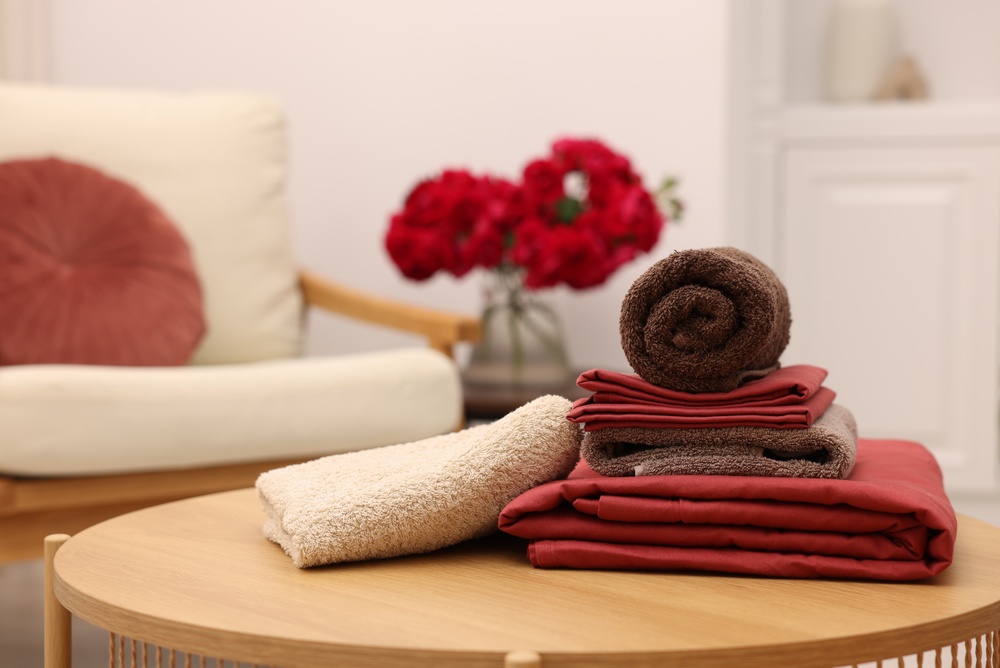
A linen closet rarely receives the same attention as a grocery list before Thanksgiving, which is exactly why it causes last-minute problems a grocery list never would. Nobody counts napkins the way they count place settings. Nobody checks a tablecloth for a returning stain the way they'd check a turkey for doneness.
That gap is the whole issue. A quick audit – count first, then condition – catches what an entire week of washing never will.
The Condition Check That Decides What Gets Washed and What Gets Replaced
Pull every tablecloth, napkin, and hand towel out of the closet before anything goes into the washer. Hold up each piece to real daylight, not the closet bulb. Look for five things:
- Yellowing along the fold lines, even if the rest of the fabric looks fine.
- Creases that have gone from a soft fold to a hard, set-in line.
- Thinning or fraying at the hems, especially on older cloth napkins.
- Rust or brown spotting picked up from storage.
- Last year's stain you thought you treated, still faintly visible.
Sort what you find into three groups:
- Washes out on its own: no extra step needed.
- Needs professional treatment: a home wash only sets what's already there instead of lifting it out.
- Needs replacement outright: before a fraying hem becomes a hole next year.
This sorting matters just as much for how many pieces you own. What are the must haves for Thanksgiving usually comes down to running short mid-meal, not anything being dirty. Check your closet against this working count:
| Item | Count for a Table of 10-12 | Notes |
|---|---|---|
| Cloth napkins | 14 to 16 | A few extra beyond guest count. They get used for spills, not just place settings. |
| Tablecloth or runner | 1 primary plus 1 backup | The backup covers a stain that shows up mid-dinner or a leaf added to the table. |
| Hand towels (kitchen and bath) | 4 to 6 | You'll swap these mid-day, not just hang one and forget it. |
| Children's-table napkins | 4 to 6 | The item hosts forget to count until someone's short. |
Once you know what you have, what's damaged, and what's missing, you know exactly what to wash, what to send out, and what to add to the shopping list. That's the difference between a calm week and a scramble on Thursday morning.
Why Linens That Went Into the Closet Clean Don't Come Out Clean
Those linens were clean when you put them away back in January. Nothing spilled on them in the closet. So why do they come out looking worse than they went in? Two separate things happen to stored linen. One comes from how it sat. The other comes from what it touched at last year's dinner.
Fold-Line Yellowing and Where It Comes From
Cotton and linen fibers oxidize fastest at points of stress, and a fold is exactly that: fabric creased and held under tension for months at a time. That's why the yellowing traces the fold line instead of dulling the whole piece.
A few things speed it up:
- Cardboard boxes and untreated wood shelving transfer acid into fabric over time.
- Sealed plastic bins trap moisture, which speeds along the same process.
None of this means you did anything wrong. It just means storage needs a small adjustment. Use breathable cotton bags instead of plastic. Refold along a different line each year. Or skip folding altogether and roll the piece instead.
Last Year's Gravy and Butter Are This Year's Brown Marks
Gravy, butter, salad dressing, and stuffing can leave oily residue that survives an ordinary wash without remaining visible. During storage, that residue may oxidize and turn yellow or brown. Wine, cranberry sauce, and other drinks or foods can also leave traces that darken later.
If a mark appears: Don't assume the linen is permanently ruined or repeatedly wash and dry it at home. Point out the stain to a professional cleaner and explain what may have spilled there. Treatment results depend on the stain, fabric, age, and previous cleaning, but early attention gives the cleaner more options.
Washing Table Linens Without Setting the Creases
Cleaning a tablecloth is only half the job. Deep fold lines can remain even after every stain and food mark disappears. How you dry and press the fabric determines whether or not it lays smoothly across your Thanksgiving table.
Follow this wash and dry routine:
- Check the care label. Use the recommended water temperature and wash cycle instead of defaulting to warm or hot water.
- Treat stains before washing. Point out or address food, wine, grease, and candle wax before heat has a chance to make them harder to remove.
- Measure the detergent. Too much can leave residue and make rinsing more difficult.
- Remove the linen while slightly damp. If the care label permits ironing, the remaining moisture can help release stubborn creases.
- Press promptly. Waiting until the fabric dries in a folded or crumpled position allows wrinkles to settle back in.
Bleach caution: Never use chlorine bleach automatically, especially on colored, printed, embellished, or weakened linens. It may damage fibers, dyes, or finishes, so use it only when the care label specifically permits it.
Pressing and Storing So It Arrives Flat on the Table
Press the linen from the center toward the edges, using the temperature listed on its care label. For damask or another raised weave, work from the reverse side over a padded surface to help protect the pattern.
After pressing:
- Let the linen cool and dry completely before storing it.
- Roll it around a clean, acid-free tube, or wrap the tube in white acid-free tissue.
- Use a wide padded hanger only for lightweight linens that will not stretch.
- If you must fold it, make loose folds with acid-free tissue between them.
- Avoid placing heavy items on top.
Before Thanksgiving: Unroll or unfold the linen several days early so you have time to smooth any creases that returned during storage.
Build In the Two Days Everything Needs
Table linens need a sequence, and each step needs its own slot of time, not a rushed evening:
- Wash.
- Inspect in daylight before drying, since heat sets whatever residue is still there.
- Press while damp.
- Store flat or rolled.
Compress that into one night and something gets skipped. A tablecloth washed the evening before Thanksgiving is either still damp or already creased from sitting folded overnight. There's no version of that Wednesday night where it gets fixed in time. Give the process two full days, and Thursday morning turns into setting the table, not solving a linen emergency.
Set the Thanksgiving Table with Freshly Cleaned Linens from Arrowhead Cleaners & Laundry
Yellowed fold lines on tablecloths and stale odors in guest towels can be signs your stored linens need more than a quick wash before company arrives. Arrowhead Cleaners & Laundry professionally cares for table linens, napkins, bedding, and towels, helping you prepare the pieces you'll actually use for Thanksgiving.
Send your table linens to Arrowhead Cleaners in Mandan, North Dakota, for professional cleaning and finishing, and save your home washer for the rest of your holiday preparations. Your tablecloths and napkins come back neatly finished and ready to set out when it's time to dress the table.
📍 Bismarck
Address: 1140 N. 3rd St., Bismarck, ND, 58501
Phone: (701) 987-7131
Hours: Monday to Friday, 7:00 AM to 6:00 PM. Saturday, 9:00 AM to 3:00 PM. Sunday, closed.
📍 Minot
Address: 1425 24th Ave. SW, Minot, ND, 58701
Phone: (701) 602-0149
Hours: Monday to Friday, 10:00 AM to 6:00 PM, closed daily 1:00 to 1:30 PM. Saturday, 10:00 AM to 2:00 PM. Sunday, closed.
